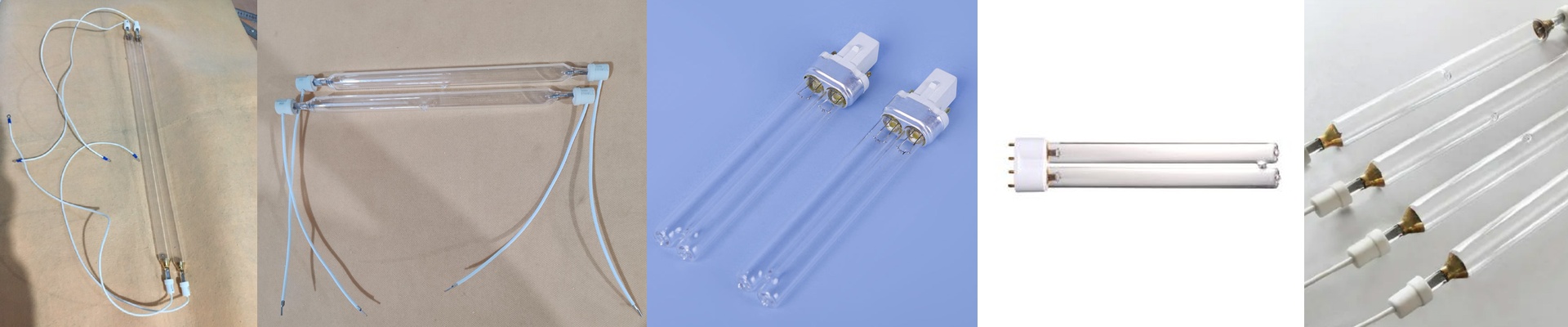
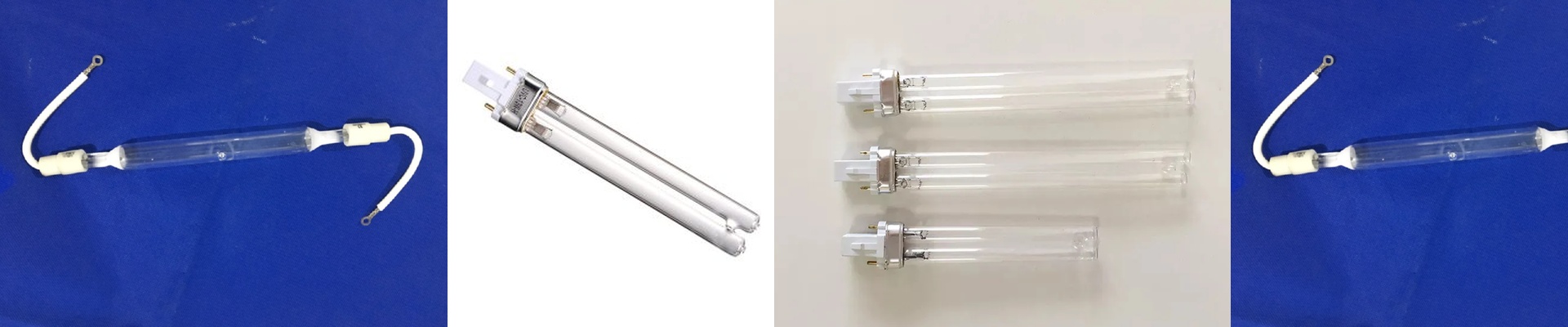
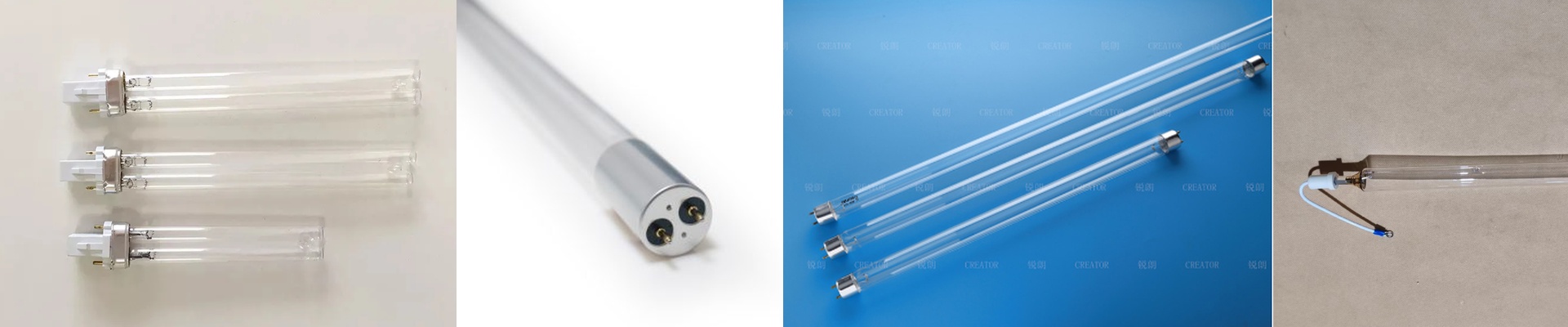
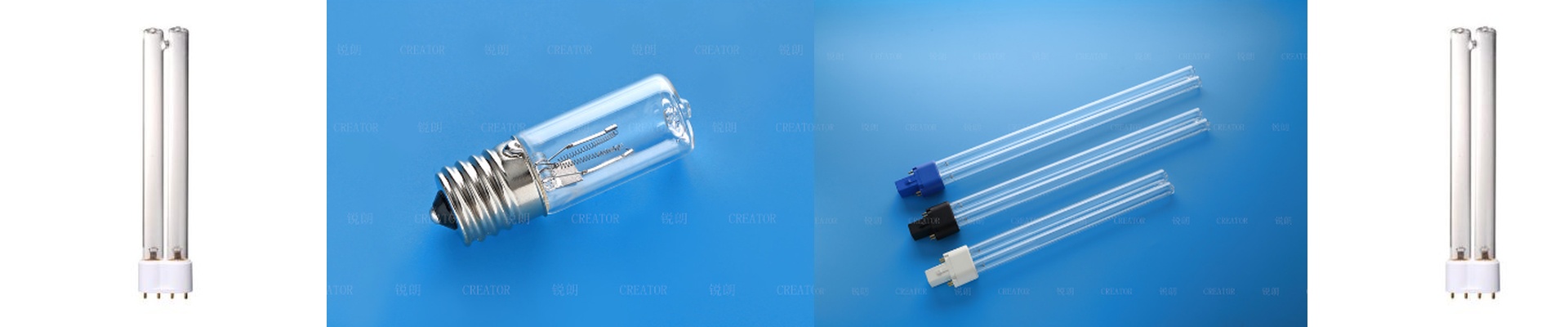
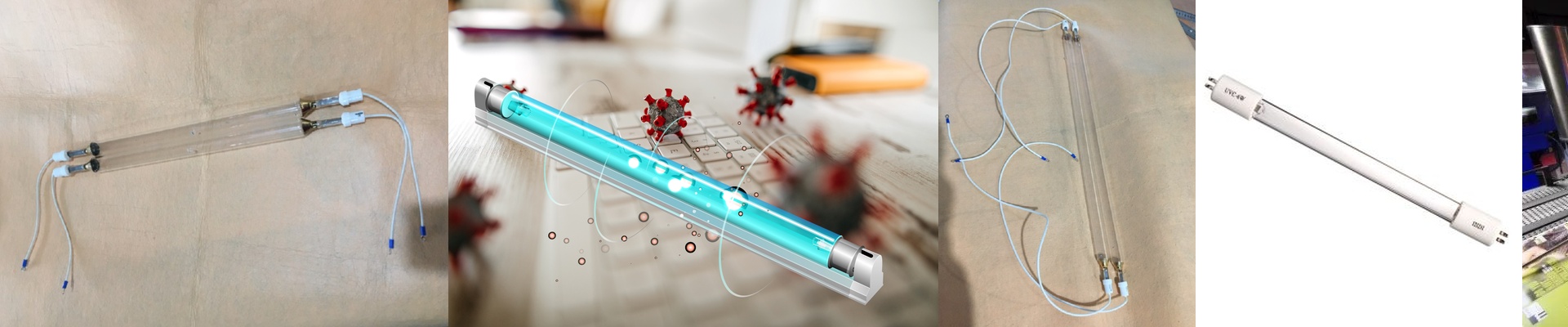
On a garment line, the curing station is usually the quiet workhorse—until it isn’t. You lay down high-opacity whites, stack passes, and toggle between plastisol-like formulations and low-cure-temperature systems. Either the lamp keeps up, or you back the press down to avoid incomplete cross-linking, surface tack, and inter-color adhesion failure. The shortwave UV versus LED UV discussion isn’t theoretical. It shows up in line speed, ink chemistry limits, and whether your curing energy stays stable across an entire shift. Fashion doesn’t pick the source. Performance does—specifically, which source can deliver the photon flux at the right wavelength to kick off photoinitiator decomposition, then hold that output for thousands of hours inside a compact, air-cooled lamp. In a lot of garment decoration workflows, the iron doped gallium iodide lamp is the only practical answer.
What actually matters under the hood
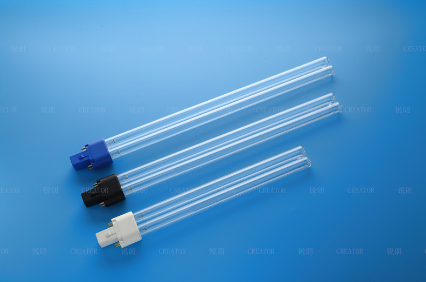
An iron doped gallium iodide lamp is a shortwave UV source built to shape the spectrum for curing. Its job is to deliver high radiant power in the UVA band—dominated by the 365 nm line—while still giving you enough output in the 300–320 nm region to drive surface cure on pigmented, layered inks. The iron doping broadens the spectrum and stabilizes the discharge, which cuts down on spectral swings during warm-up and over the life of the lamp. Gallium iodide chemistry keeps excess visible light in check and helps the output match the absorption profile of the photoinitiators used in screen-printable UV inks. The metrics that matter are simple, and they’re measurable:
- Peak irradiance at the substrate plane: In a typical garment-printing curing zone, the lamp has to push enough flux density through the ink’s absorption to get complete polymerization before the print clears the lamp. The iron doped gallium iodide system is built to hit peak irradiance levels that keep line speeds up, even with thick deposits.
- Spectral output: The strong 365 nm line penetrates deeper, giving you through-cure on high-build prints. The shortwave tail accelerates surface cure and reduces oxygen inhibition—the kind that leaves you with tack. That combination is tough to match with narrowband LEDs when opacity, layer thickness, and pigment loading are always changing.
- Energy density (mJ/cm²): You need repeatable energy density across the print width. That comes down to lamp power, reflector geometry, and dwell time. In practice, the iron doped gallium iodide lamp can deliver the required energy density with shorter dwell, which translates into more cycles per minute.
- Warm-up and stability: LED systems hold steady from a cold start, but mercury-based lamps need a controlled warm-up to hit thermal equilibrium. Iron doped gallium iodide lamps get to stable operating temperature quickly, and the output stays consistent through long runs—exactly what you need when the curing window is tight.
- Life and output decay: End-of-life behavior is driven by arc discharge degradation and electrode wear. With proper powering and cooling, iron doped gallium iodide lamps keep usable output for thousands of hours, and the spectral shift is predictable.
- Reflector and dichroic control: Real-world performance depends on reflector design and any dichroic coatings used to shape the spectrum and focus energy onto the substrate. A well-matched reflector cuts stray heat and maximizes usable UV at the target plane.
Why this works on a garment line
Garment printing isn’t one layer and done. You print base whites, add process colors, hit specialty effects, and often stack multiple layers before final curing. Each layer absorbs differently, and each ink formulation carries a photoinitiator package tuned to a specific spectral window. Shortwave UV sources—especially iron doped gallium iodide lamps—handle that mess because they deliver enough spectral breadth to trigger multiple photoinitiator chemistries at once. The 365 nm output drives depth cure through pigmented layers, while the shortwave tail locks in surface cross-linking, improving scratch resistance and preventing blocking between layers. That’s critical when you’re printing on dark substrates and the first layer has to cure fully before the next color goes down. LED UV shines on thin films and single-pass jobs with inks that are already tuned for it. But LED output is narrowband, and photon density is capped by LED junction area and thermal limits. When ink gets thicker or opacity climbs, LED systems often force slower line speeds or longer dwell. That can fly in some packaging work, but it’s a constraint on a garment line where throughput is measured in thousands of pieces a day. The iron doped gallium iodide lamp also supports faster line speeds without giving up cure quality. High peak irradiance shortens the exposure window needed to hit the required energy density. In practical terms, you can run the press faster without cranking lamp power, and you can cure multiple layers in a single pass. Energy draw is a nice bonus. LED gets marketed as more efficient, but the total system energy needed to fully cure thick, opaque prints can be higher when the LED array has to be oversized to compensate for limited penetration. The iron doped gallium iodide lamp concentrates energy into the wavelengths that drive cross-linking, and the reflector system focuses that energy onto the substrate. Reliability matters on the floor, too. Lamp replacement frequency and downtime hit the bottom line. Iron doped gallium iodide lamps work with the lamp housings and power supplies already common in industrial UV curing, so service is straightforward. In the field, I’ve seen installations run 5,000+ hours with controlled output decay, as long as the lamp is run within its rated parameters and the cooling airflow is maintained.
The details you can’t gloss over
An iron doped gallium iodide lamp isn’t a plug-and-play swap unless you pay attention to the details that determine performance and safety.
- Power supply compatibility: The lamp needs a ballast or power supply matched to its ignition voltage, operating current, and warm-up behavior. Get that wrong and you’ll see an unstable arc, lower output, and a shortened lamp life.
- Cooling and thermal management: These lamps run hot. You need adequate airflow across the lamp and reflector to keep output stable and protect the substrate. On sensitive fabrics, manage thermal load with lamp height, airflow, and—when needed—intermittent duty cycles.
- Ozone considerations: Shortwave UV creates ozone. Use a lamp assembly with an ozone-free design or make sure you have ventilation that pulls ozone out of the curing zone. That protects operators and prevents degradation of materials sensitive to ozone.
- Reflector and alignment: The reflector’s geometry and coating define the irradiance profile. If it’s misaligned or degraded, peak irradiance drops and you’ll see uneven cure across the print width.
- Substrate sensitivity: Some synthetics can’t take heat. Even though the lamp is optimized for UV output, infrared and conducted heat still need to be managed. Adjust lamp height, increase airflow, or add heat shielding for heat-sensitive substrates.
- Spectral radiometry and process control: Keep cure quality consistent by measuring peak irradiance and energy density at the substrate plane with a spectral radiometer. Lock in a baseline during qualification, then monitor periodically to catch lamp aging and keep results repeatable shift after shift. If your garment printing relies on thick builds, layer stacking, and inks that vary by job, shortwave UV is still the most flexible way to cure. The iron doped gallium iodide lamp gives you the spectral output and radiant power to run at production speeds without compromising cure depth or surface finish. LED UV belongs in controlled, single-layer workflows. But when the press is running and the curing station has to keep pace, the iron doped gallium iodide lamp is the engineering choice that keeps the line moving.